
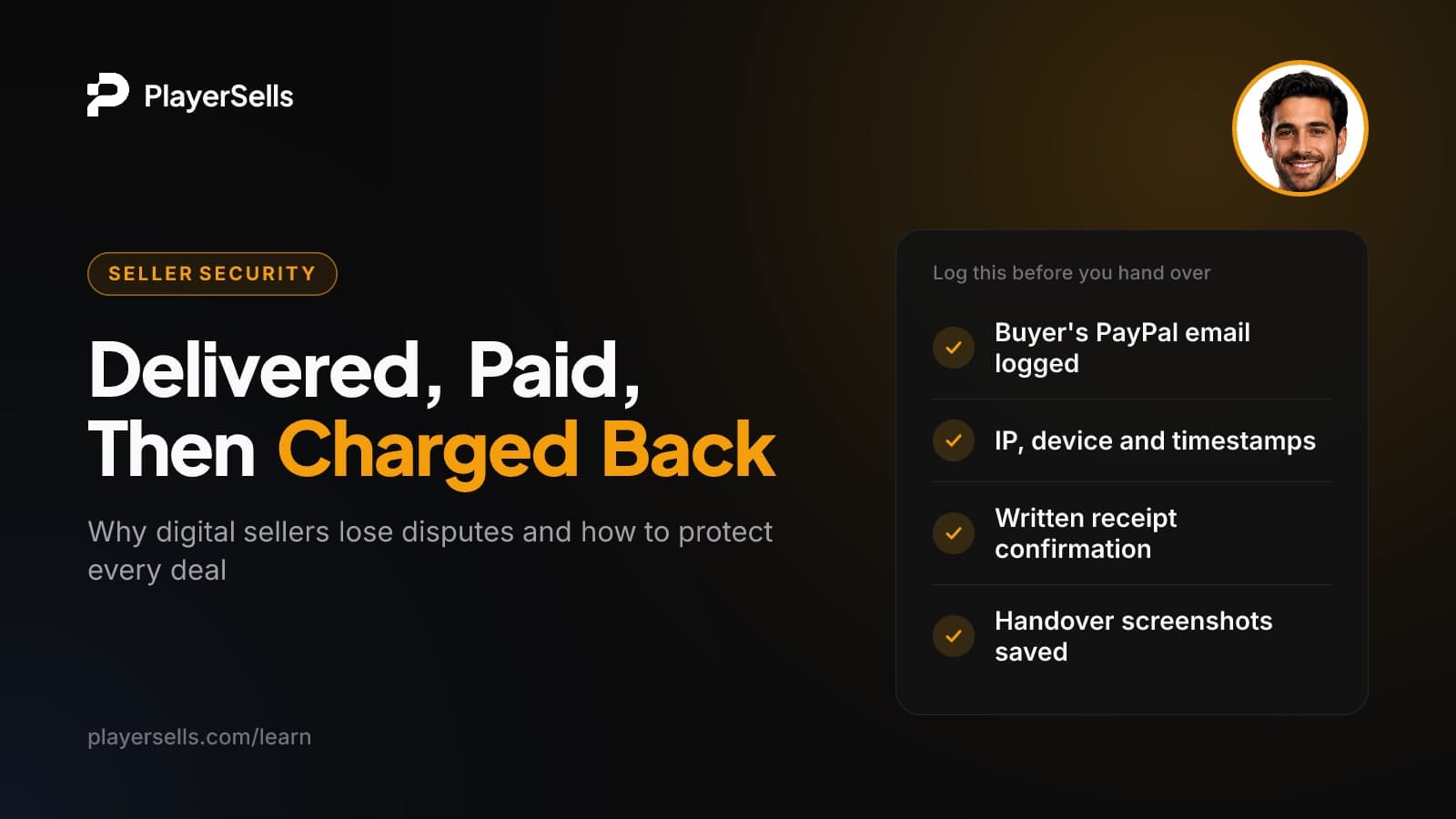
Chargeback Scams: How Digital Goods Sellers Lose Money
A chargeback scam is when a buyer receives an account or item, then reverses the payment. See why digital sellers lose disputes and which setups protect you.
A chargeback scam (also called friendly fraud or first-party fraud) is when a buyer receives the account, skins or code they paid for and then asks their bank or PayPal to reverse the payment. Digital sellers lose many of these cases because the card issuer makes the final call, and PayPal Seller Protection never covers "Significantly Not as Described" claims.
This guide is for people who sell game accounts, social media accounts, in-game items and digital codes person to person, without a merchant team behind them. It also corrects a common myth: Friends and Family payments get no PayPal protection for the buyer, but that does not make them safe for the seller, because a card-funded payment can still be disputed with the card issuer.
Key takeaways
- A chargeback is filed by the cardholder with their card issuer outside PayPal, and the issuer, not PayPal, decides the outcome.
- PayPal Seller Protection does not cover "Significantly Not as Described" claims, which is the claim a dishonest buyer of a digital account or item can file after delivery.
- In the US, PayPal only protects intangible goods when the seller meets extra requirements, including proof of delivery, and digital-goods coverage varies by country.
- Friends and Family payments carry no PayPal protection for either side, and a card-funded Friends and Family payment can still be disputed with the card issuer.
- One chargeback can cost a merchant up to 2.5x the original transaction amount, according to a Mastercard B2B blog post, since fees and the lost goods come on top of the refund.
- Escrow that holds funds until the buyer confirms delivery, combined with a written evidence trail, is a practical defense for one-off digital sales.
What is a chargeback scam, and why are digital sellers a target?
A chargeback scam is a payment reversal requested by a buyer who actually got what they paid for. The payments industry calls it first-party fraud because the person committing it is the legitimate account holder, not a thief using stolen details.
How common it is depends on who is counting. Mastercard's 2026 research says merchants and issuers estimate about 20% of disputes are linked to first-party fraud. Verifi, a Visa company, puts chargeback fraud at as much as 75% of all transaction disputes. The two figures measure different things, but both show the problem is large.
Not every case is planned. Mastercard and Datos Insights found that 48% of consumers have disputed a charge they later realized was legitimate. Mastercard also reports that more than three-quarters of merchants believe disputing has become too easy.
Digital goods are an easy target for three reasons:
- No physical trail. There is no tracking number or signature, only a login handed over in a chat.
- Instant, permanent value. Once the buyer has the credentials or the skins, they have the value. They can trade the items away or keep using the account while the dispute runs.
- Easy stories. "The account wasn't as described" or "items were missing" are hard to disprove from screenshots alone.
A Mastercard B2B blog post cites a Mastercard report estimating that 75% of card-not-present fraud at digital-goods merchants comes from first-party fraud. That is the environment you sell into.
Payment reversal and account reclaim are two different risks
A chargeback takes your money back. A recovery scam takes the account back through the platform's own recovery process. Sellers mostly face the first; buyers mostly fear the second, which we cover in our guide to account recovery scams. They need separate defenses, and a buyer filing a dispute may claim the account was "recovered" from them, so your evidence should prove you handed over full, exclusive access.
How do buyers reverse a payment after delivery?
Buyers have two main routes: a card chargeback through their bank, or a dispute through PayPal. They work differently, and sellers often confuse them.
Card chargebacks
PayPal is explicit that a chargeback is not the same as a PayPal claim. The cardholder starts it with their card issuer, outside PayPal, and the issuer decides the outcome. PayPal charges the seller a chargeback fee. If the sale is covered by Seller Protection, PayPal covers the chargeback amount and waives the fee.
The same logic applies if you take cards through a processor like Stripe: the issuer rules, and you can only submit evidence. Card network time limits vary and are set by the networks, so check your processor's documentation rather than assuming a short window.
PayPal disputes
Under PayPal's US User Agreement (as of October 2026), a buyer must open a dispute within 180 days of the payment date to pursue a Purchase Protection claim. In plain terms, an account you sold in April can come back as a dispute in October.
The stories buyers tell
Most reversals on digital sales fall into a few claim types: "I never received the login" (Item Not Received), "the account wasn't what was listed" (Significantly Not as Described), or "I didn't authorize this payment" (Unauthorized Transaction). Each one is judged differently, which is why the next section matters.
Why do digital sellers lose so many disputes?
Because the claim that hurts digital sellers most is the one PayPal never protects, and proof of delivery does not answer it. According to PayPal's Seller Protection help page, coverage excludes "Significantly Not as Described" claims, "Item Not Received" claims filed directly with the card issuer, and cash-equivalent items such as prepaid or gift cards.
Think about what that means for an account sale. You can prove the buyer logged in, changed the email and kept the account for weeks. If they claim the rank was lower, the skins were missing or the followers were fake, delivery proof is beside the point. Their claim is about quality, not receipt. PayPal's Singapore page goes further and excludes these claims whether the buyer files them with PayPal or with their card issuer.
Then there is who decides. For chargebacks, the issuer is the cardholder's own bank. You are a stranger submitting screenshots.
| Claim type | What the buyer says | PayPal Seller Protection (US, as of October 2026) | What actually helps |
|---|---|---|---|
| Item Not Received, filed with PayPal | "I never got the login" | Possible for intangibles only if extra requirements are met, including proof of delivery | Timestamped handover, buyer's written receipt |
| Item Not Received, filed with card issuer | "I never got the login" | Not covered | Evidence sent to the issuer, which decides |
| Significantly Not as Described | "It wasn't as listed" | Never covered | Precise listing, buyer's written confirmation it matched |
| Unauthorized Transaction | "I didn't make this payment" | Intangibles only if PayPal marked the transaction "eligible" or confirmed it in writing | Buyer identity data: PayPal email, IP, device |
| Friends and Family payment | Any | Ineligible (personal payment, per PayPal's Singapore page) | Nothing from PayPal |
| Gift cards and prepaid codes | Any | Not covered (cash equivalent) | Nothing from PayPal |
Is PayPal Goods and Services safe for sellers of digital items?
It is safer than Friends and Family, but for digital sellers the protection is narrow and conditional. PayPal's US Seller Protection Program requires the item to be a physical good that can be shipped, unless the sale meets PayPal's "Intangible Goods Additional Requirements." Those require you to deliver the item and provide proof of delivery.
For Unauthorized Transaction claims on intangible goods, there is one more condition: PayPal must have marked the transaction "eligible" on the Transaction Details page, or told you in writing that it is eligible. PayPal's help center adds that you must meet integration requirements, show the item was delivered as described, and have paid transaction fees on the sale.
A person-to-person seller sending a single invoice may not meet those integration requirements. The practical move: open the Transaction Details page before you deliver anything and look for the eligibility label. If it is not there, assume you have no protection against an Unauthorized Transaction claim on that sale, and treat the rest of your coverage as uncertain.
Rules differ by country
PayPal's own pages disagree. The Singapore page says intangible goods such as digital products can be eligible with proof of delivery. A regional PayPal page on its Turks and Caicos site still says digital goods and services are not covered at all. Check the Seller Protection page for your own country, as of the date you sell.
Selling game or social media accounts may break the publisher's or platform's terms, and may also conflict with PayPal's Acceptable Use Policy. Check both before you accept payment. No payment method makes a sale that breaks those rules safe.
The PayPal Friends and Family scam: why F&F doesn't make sellers safe
Friends and Family removes PayPal's protection, but it does not remove the buyer's ability to go to their bank. Many sellers believe the opposite, and that belief is the seller-side version of the Friends and Family scam.
Here are the facts as of October 2026:
- PayPal's Purchase Protection does not cover personal payments, including Friends and Family payments.
- PayPal's Singapore Seller Protection page lists Friends and Family payments as ineligible, so you get no seller coverage either.
- Friends and Family payments can be funded by a credit or debit card. Wise reports a 2.9% plus $0.30 fee when they are.
- Card chargebacks are started with the card issuer outside PayPal, and the issuer decides.
Put those together and a card-funded Friends and Family payment can still be disputed with the issuer, while you have no Seller Protection to fall back on. That is a worse position than Goods and Services, not a better one. Friends and Family is also not available in every country.
The classic buyer-side version runs the other way. PayPal warns that scammers often ask for payment through person-to-person options and tells buyers to use Goods and Services when paying a seller. Honest buyers know this, so asking for F&F also makes you look like a scammer. Our buyer-side guide on how to pay for an account without losing your money explains what careful buyers look for.
What does a chargeback actually cost a seller?
More than the sale price. When you lose, you refund the money, you lose the goods, and you pay fees that are often not returned even if you win.
- The refund: the full payment goes back to the buyer.
- The goods: the account or items are usually gone for good.
- PayPal's chargeback fee: PayPal says it depends on the currency received. Chargeflow, a chargeback-management vendor, reports it as a flat $20 USD that is not refunded whatever the outcome, separate from PayPal's tiered dispute fees. Check your own PayPal fee page.
- Processor fees: as of October 2026, standard Stripe pricing charges $15.00 per dispute received, plus a $15.00 "dispute countered" fee if you respond manually, refunded only if you win. Its optional Smart Disputes service takes 30% of the disputed amount on disputes it wins.
- Your time: gathering evidence and writing responses for a case you may not control.
A Mastercard B2B blog says one chargeback can cost a merchant up to 2.5x the original transaction amount. Example: sell a $100 Valorant account by card through PayPal, lose the chargeback, and you are out the $100, the account, and any chargeback fee on top.
The scale is growing. Mastercard's 2026 research projects 334 million chargebacks a year by 2028, with an average merchant chargeback value of $94, and its 2025 State of Chargebacks report forecasts the global cost to merchants reaching $42 billion by 2028.
Which payment setups protect digital sellers best?
None is risk-free, but they differ a lot in who can reverse a payment and when. The table below uses only what PayPal and Stripe publish and what the escrow model does by design.
| Payment setup | Who can reverse it | Time limit | Protection for a digital seller |
|---|---|---|---|
| Card via a processor (e.g. Stripe) | Cardholder, through their issuer | Set by card network rules; varies | None by default; you submit evidence and pay dispute fees |
| PayPal Goods and Services | Buyer via PayPal dispute; cardholder via issuer if card-funded | 180 days for a PayPal dispute (US) | Only if intangible requirements are met; never for SNAD claims |
| PayPal Friends and Family | No PayPal claim; card-funded payments can still go to the issuer | Card network rules for card-funded payments | None: personal payments are ineligible |
| Escrow (funds held until buyer confirms) | Buyer raises a dispute before release | Before the deal completes; check the service's terms for what happens after | Money is not released until delivery is confirmed; evidence decides open disputes |
Escrow changes the timing. Instead of you delivering first and hoping the money stays, the buyer pays a third party that holds the funds. You are paid after the buyer confirms the item matched the description, which turns the vague "not as described" complaint into something raised and reviewed before money moves. Read any escrow service's rules so you know what happens if a dispute is opened.
How do you protect yourself before handing over an account or item?
Build your evidence before delivery, not after the dispute arrives. Use this sequence on every sale:
- Step 1: Write a precise description (rank, skins, follower count, email status, region) and get the buyer to agree to it in writing. This is your only real answer to a "not as described" claim.
- Step 2: Check the payment type. If it is PayPal, confirm it was sent as Goods and Services and look for the "eligible" label on the Transaction Details page.
- Step 3: Record the buyer's identity: the email registered to their PayPal account, their name, and their chat handle. Make sure they match the person you are talking to.
- Step 4: Log technical data where you can, such as login alerts showing the buyer's device and location, with timestamps.
- Step 5: Screenshot or record the handover: credentials sent, email and password changed, the buyer's first successful login.
- Step 6: Ask for written confirmation that the buyer received everything and that it matches the listing. Keep it in the same chat as the agreement.
- Step 7: Store everything for at least the dispute window: 180 days for a US PayPal dispute, and longer if card rules might apply.
Why Visa Compelling Evidence 3.0 rarely helps one-off sellers
Visa's Compelling Evidence 3.0 rule lets a merchant fight a friendly-fraud claim when the dispute matches earlier purchases. According to Chargeflow's explanation, at least two of four data points (login ID, delivery address, device ID, IP address) must match two or more earlier undisputed transactions from the same cardholder, made 120 to 365 days before the disputed one. A seller who deals with a buyer once has no such history, so this tool is mostly out of reach.
What should you do if you get hit with a chargeback or PayPal dispute?
Respond quickly, match your evidence to the claim type, and decide whether fighting is worth the fees.
- Step 1: Note the deadline on the case and respond inside PayPal or your processor's dashboard before it passes.
- Step 2: Identify the claim: Not Received, Not as Described, Unauthorized, or a chargeback from the issuer. Each needs different proof.
- Step 3: Submit evidence that answers that specific claim: the agreed description and written confirmation for SNAD, handover records for Not Received, identity and device data for Unauthorized.
- Step 4: Keep the response factual and short. Issuers review many cases, so lead with the strongest document.
- Step 5: Weigh the cost. On standard Stripe pricing, responding manually adds a $15 fee you only get back if you win.
- Step 6: Do not take the account back yourself. It weakens your claim that you delivered as described and turns you into the party accused of a recovery scam.
How PlayerSells handles payment and disputes for sellers
PlayerSells is built around escrow. The buyer pays PlayerSells, the money is held, and the seller is paid only after the buyer confirms the account or item was delivered as described. That moves the "was it as described" question to before payout, which is exactly where person-to-person sellers are weakest.
Every deal follows a fixed sequence: offer sent, accepted, payment pending, paid, delivered, buyer confirmed, completed. Either side can open a dispute before completion. A human moderator reviews it, and the money stays held while it is open, so the evidence habits above still matter. Every listing is also reviewed by a person before it goes live, and a clear, specific description is still your best protection against a later "not as described" claim.
Sellers get an on-platform wallet and can withdraw after a clearing period. You can list social media accounts on the seller page or CS2 and Rust items through skin selling. See how deals work, our safety guidelines, and current fees on the pricing page.
Frequently asked questions
Can a buyer do a chargeback after receiving a digital item or account?
Yes. A card chargeback is started by the cardholder with their issuer, outside PayPal, and receiving the item does not stop them from filing. The issuer decides the outcome, and if they claim the item was not as described, PayPal Seller Protection will not cover you.
Does PayPal Seller Protection cover digital goods?
Sometimes, depending on your country and the sale. In the US, intangible goods only qualify under extra requirements, including proof of delivery, integration requirements and, for unauthorized claims, PayPal marking the transaction "eligible." Some regional PayPal pages say digital goods are not covered at all, so check your own region.
Can someone charge back a PayPal Friends and Family payment?
Yes, if it was funded by a card. The buyer can still dispute it with their card issuer, which decides chargebacks outside PayPal. Friends and Family payments get no PayPal Purchase Protection and are ineligible for Seller Protection, so a seller has nothing to fall back on.
How long does a buyer have to file a PayPal dispute or chargeback?
Under PayPal's US User Agreement, a buyer has 180 days from the payment date to open a dispute for a Purchase Protection claim. Card chargeback windows are set by the card networks and vary, so keep your evidence for at least six months and longer if the buyer paid by card.
Which payment methods can't be charged back?
Do not assume any method is permanently safe. Card-funded payments can be disputed with the issuer even when sent as Friends and Family, and PayPal Goods and Services carries a 180-day dispute window in the US. Holding funds in escrow until the buyer confirms delivery reduces the risk more reliably than choosing a "no-refund" payment option.
Is friendly fraud always deliberate?
No. Some buyers forget a purchase or do not recognize the charge name, and Mastercard research found 48% of consumers have disputed a charge they later realized was legitimate. That is why clear records, recognizable payment references and written confirmations help even with honest buyers.
Bottom line: get paid in a way you can defend
If you sell digital goods by delivering first and accepting a reversible payment, you are carrying the risk alone, and the rules on "not as described" claims favor the buyer. Friends and Family does not fix that, and PayPal Goods and Services only helps on digital sales that meet its intangible-goods requirements, never against a "not as described" claim.
Your next step: do not deliver until the funds are secured, and keep a written evidence trail on every sale. To see how holding funds until buyer confirmation works in practice, read our guide to escrow payment protection.
Free tools for this topic

Published by the PlayerSells editorial team. Data comes from PlayerSells marketplace records and our own crawlers. About PlayerSells · Editorial policy
Related Articles
Continue learning with these related guides.
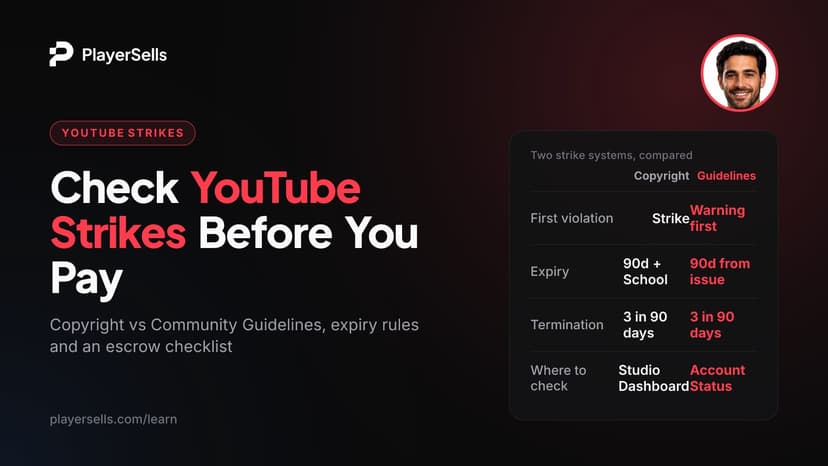
YouTube Copyright Strike vs Guidelines Strike: Buyer's Guide
A YouTube copyright strike and a Community Guidelines strike follow different rules. See how long each lasts, when channels get terminated and how to check.
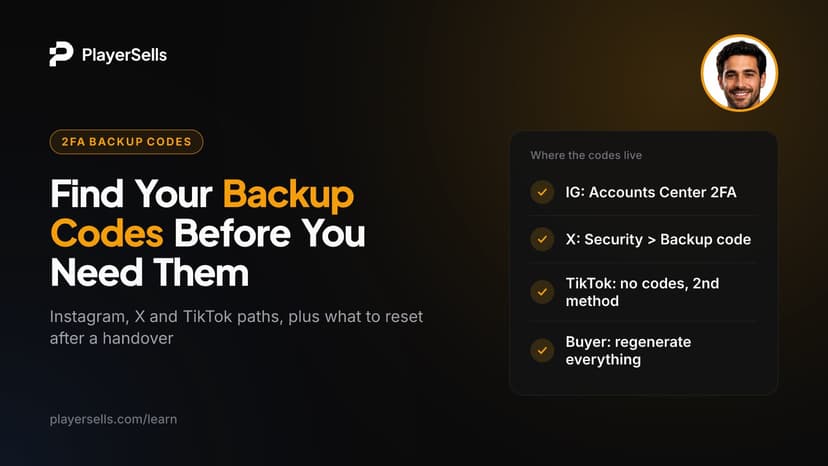
Instagram Backup Codes (and X, TikTok): Where to Find Them
Find Instagram backup codes, your X backup code and TikTok's 2FA fallback, step by step. Plus what a buyer must reset when an account changes hands.

Instagram Account Disabled? Causes, Appeals and Timelines
Instagram account disabled, suspended or restricted? Learn which state you're in, how to appeal, the video selfie check, and what the 180-day window means.