
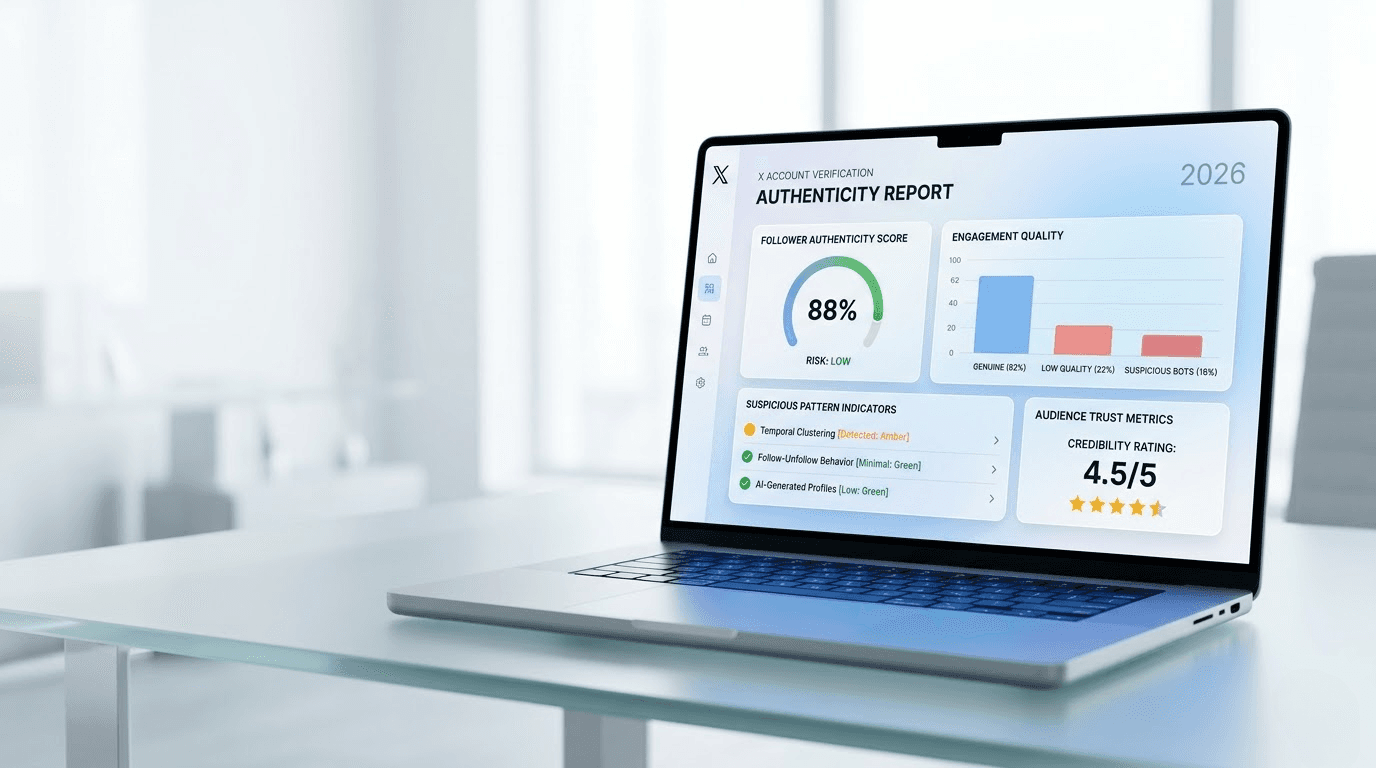
How to Check If an X Account Has Real Followers Before You Buy It in 2026
Thinking about buying an X account? Learn exactly how to audit followers, spot fake engagement, check for shadowbans, and verify audience quality before you spend a dime. Step-by-step guide for 2026.
Buying an X account with 50,000 followers sounds like a shortcut to credibility — until you find out 40,000 of them are bots that will never see your posts.
Every year, buyers waste money on accounts padded with fake followers, inactive profiles, and engagement that disappears the moment they take ownership. The account looks impressive on the surface. The numbers suggest influence. But behind the metrics, there's nothing real.
If you're a founder, agency owner, marketer, or personal brand builder considering purchasing an X account, the single most important step you can take is verifying that the followers are real, engaged, and relevant to your goals. This guide walks you through exactly how to do that — step by step, with no guesswork.
Why Checking for Real Followers Matters Before Buying an X Account
The Real Cost of Fake Followers
An X account with inflated follower numbers isn't just a bad deal — it's a liability. Fake followers don't engage with your content. They don't click links, buy products, or share your posts. Worse, accounts with a high percentage of fake followers often have damaged algorithmic standing. X's algorithm rewards genuine engagement. An account that posts to 50,000 followers but gets 3 likes per tweet is sending X a clear signal that nobody cares about this content — and the algorithm responds by suppressing reach even further.
You're not just paying for a number. You're paying for distribution, credibility, and momentum. Fake followers give you none of those.
What "Real Followers" Actually Means on X in 2026
A real follower is an active X user who chose to follow the account based on genuine interest in its content. They have a profile photo, a bio, some posting history, and they occasionally interact with the accounts they follow.
This is different from:
Bot accounts — created in bulk, often with no profile photo, generic bios, or randomized usernames
Inactive accounts — real people who signed up years ago and never came back
Follow-for-follow accounts — users who followed to get a follow back and have no real interest in the content
Purchased followers — accounts added through growth services that sell bulk followers
The distinction matters because only real, active followers contribute to the engagement, reach, and reputation you're paying for.
Step 1 — Analyze the Follower-to-Engagement Ratio
The fastest initial check is the engagement rate. This tells you what percentage of the account's followers are actually interacting with its posts.
How to calculate it: Take the average number of likes, replies, and reposts on the last 20–30 posts. Divide that by the total follower count. Multiply by 100.
What Healthy Engagement Looks Like by Account Size
Follower Count | Typical Engagement Rate |
|---|---|
1,000–10,000 | 1.5%–5% |
10,000–50,000 | 1%–3% |
50,000–100,000 | 0.5%–2% |
100,000+ | 0.3%–1.5% |
These ranges are approximate and vary by niche. Crypto and tech accounts tend to see higher engagement when the audience is organic. Lifestyle accounts may see slightly lower.
If you want to skip the manual math, you can use an engagement calculator to pull these numbers quickly.
Red Flag Engagement Patterns
Watch for these warning signs:
Follower count is high but engagement is near zero. If a 40K-follower account consistently gets fewer than 10 likes per post, something is wrong.
Engagement is wildly inconsistent. A post with 2 likes followed by one with 800 suggests purchased engagement on specific posts.
Replies are generic or spammy. Comments like "Great post!" or "Love this 🔥" from accounts with no followers themselves often signal bot activity.
Step 2 — Inspect the Follower List Manually
Tools are useful, but nothing replaces scrolling through the actual follower list. Spend 10–15 minutes browsing followers at random — not just the first few visible ones.
Signs of Bot Accounts
No profile photo or a stock image
Username is a string of random numbers or letters (e.g., @user8374629)
Account was created recently and follows thousands but has almost no followers
Bio is blank or contains generic motivational quotes
Zero or near-zero posts
Follows a massive number of accounts relative to their follower count (e.g., follows 5,000 but has 12 followers)
What Real Followers Look Like
They have profile photos, bios, and posting activity
Their follower/following ratio is reasonable
Their accounts show varied activity — replies, original posts, reposts
Their interests align with the account's niche
If you scroll through 100 followers and more than 30–40% look like bots or empty shells, the account's real audience is significantly smaller than the number suggests.
Step 3 — Use a Follower Audit Tool
Manual inspection is important, but a dedicated audit tool can scan thousands of followers in minutes and give you a statistical breakdown.
How Follower Audit Tools Work
These tools sample a portion of an account's followers and analyze each one against a set of quality indicators: profile completeness, activity level, follower/following ratios, account age, and posting frequency. The result is a percentage breakdown of real vs. suspicious vs. fake followers.
You can run a follower audit to get an automated quality score before making a buying decision.
What Metrics to Focus On
Real follower percentage: Aim for 70% or higher. Anything below 60% is a significant concern.
Active vs. inactive ratio: Even if followers are "real" accounts, check how many have been active in the last 90 days.
Geographic distribution: If the account claims to target an English-speaking audience but 70% of followers are from regions where the content language isn't spoken, that's suspicious.
Follower growth velocity: Organic accounts grow gradually. If there are visible spikes where thousands of followers appeared overnight, that usually indicates purchased followers.
Step 4 — Check for Shadowbans and Restrictions
A shadowban on X means the platform has restricted an account's visibility without notifying the owner. Shadowbanned accounts can still post, but their content doesn't appear in searches, hashtag feeds, or recommendations the way it normally would.
Why Shadowbans Kill Reach
If you buy a shadowbanned account, you're inheriting suppressed distribution. Even if the followers are real, your content won't reach them effectively. Shadowbans can result from past violations, aggressive automation, or spam-like behavior by the previous owner.
How to Run a Shadowban Check
Before any purchase, run the account through a shadowban checker. This will tell you whether the account currently has any search bans, ghost bans, or reply deboosting in effect.
If the account is shadowbanned, it's either a dealbreaker or a significant price reduction point — depending on the severity and whether the ban is likely to be lifted.
Step 5 — Review Content Performance Over Time
Don't just look at the most recent posts. Scroll back weeks or months and look at how the account performed over time.
Look for Consistency, Not Spikes
A healthy account will show relatively consistent engagement across its recent content. There may be occasional hits and misses, but the baseline should be stable. If you see long stretches of near-zero engagement with occasional viral-looking spikes, the spikes were likely boosted artificially.
Warning Signs in Historical Performance
Engagement dropped off a cliff at some point — this may indicate the account was once organic but then padded with fake followers, which diluted the engagement rate
Content topics shifted drastically — if the account suddenly changed niches, many of the original followers may no longer engage
Long gaps with no posts — dormant periods can cause follower decay and reduced algorithmic favorability
Step 6 — Evaluate Audience Relevance to Your Niche
A 30,000-follower tech account is far more valuable to a SaaS founder than a 100,000-follower general meme account. Numbers don't matter if the audience doesn't match your goals.
A Big Audience That Doesn't Match Your Niche Is Worthless
If you're launching a crypto project, you want followers who care about crypto. If you're building a personal brand in finance, you need an audience that engages with finance content. An audience mismatch means you'll essentially be starting over in terms of meaningful engagement — with the added burden of an algorithm trained on the wrong type of interaction.
How to Assess Niche Fit
Look at who engages with the account's posts. Are the replying accounts in your target niche?
Check the account's following list. Who does it follow? This often signals the niche.
Review the content history. Does it align with the direction you plan to take the account?
Look at the language and tone. Will the existing audience respond well to your content style?
If you're looking for accounts in a specific vertical — such as crypto and Web3, tech, or finance and business — filtering by niche from the start is far more efficient than evaluating general-purpose accounts.
Step 7 — Assess Account Health and Handover Safety
Even if the followers check out, the account itself needs to be in good standing and transferable without risk.
Account Age, Email Access, and 2FA
Account age matters. Older accounts carry more algorithmic trust than newly created ones. An aged X account that's been active for years is generally more resilient and less likely to be flagged during ownership transitions.
Original email access is critical. If the seller can't hand over the original email address tied to the account, you're exposed to recovery risks. Make sure email access is part of the deal.
2FA transfer must be handled cleanly. Two-factor authentication needs to be disabled or re-configured during handover. A sloppy 2FA transition is one of the most common points of failure.
What a Safe Handover Process Looks Like
A proper handover includes: full credential transfer (password, email, phone number), disabling and re-enabling 2FA under the new owner, a verification window where the buyer confirms access, and clear documentation of what was transferred.
If you want to understand the full process, Playersells.com has a detailed breakdown of how the handover works, along with trust and safety policies designed to protect both buyers and sellers.
Quick-Reference Audit Checklist
Audit Step | What to Check | Red Flag |
|---|---|---|
Engagement ratio | Likes, replies, reposts vs. follower count | Below 0.5% engagement on most posts |
Manual follower inspection | Profile quality, activity, niche relevance | 30%+ bot-looking accounts |
Follower audit tool | Real vs. fake percentage, growth patterns | Below 60% real followers |
Shadowban check | Search ban, ghost ban, reply deboosting | Any active ban |
Content performance history | Consistency, engagement trends over time | Sudden drops or artificial spikes |
Audience niche relevance | Alignment between followers and your goals | Major niche mismatch |
Account health | Age, email access, 2FA, ban history | No email access or recent violations |
How to Estimate What an X Account Is Actually Worth
After you've confirmed the followers are real, you need to know what the account is worth. The price of an X account depends on follower count, engagement rate, niche, account age, verification status, and historical performance.
A 20,000-follower account with a 3% engagement rate and a focused crypto audience is often worth more than a 60,000-follower account with 0.4% engagement in a broad, unfocused niche.
You can get a quick estimate using a free account valuation tool. It considers multiple factors — not just follower count — to give you a realistic price range.
Where to Find X Accounts With Verified, Real Followers
If you've made it this far, you're clearly serious about doing this the right way. The challenge most buyers face isn't just auditing — it's finding a marketplace they can trust.
Playersells.com focuses specifically on X account transactions with an emphasis on audience quality, niche relevance, and safe transfers. Accounts listed on the platform go through evaluation, and the marketplace is built to reduce the risk that comes with buying accounts through informal channels like DMs, forums, or unvetted sellers.
Whether you're looking for a crypto account for a token presale, a tech account for a SaaS launch, or a creator account for audience building, starting with a curated marketplace reduces the time you spend filtering out junk.
Frequently Asked Questions
What percentage of real followers is acceptable when buying an X account?
Aim for at least 70% real, active followers. Accounts in the 80–90% range are strong. Below 60% is a significant red flag and usually means the account was inflated with purchased followers at some point.
Can I check if an X account is shadowbanned before buying it?
Yes. You can use a shadowban checker to test whether the account has active search bans, ghost bans, or reply deboosting. Run this check before committing to a purchase, because a shadowbanned account has limited visibility regardless of follower count.
What's a normal engagement rate on X in 2026?
It depends on follower count. For accounts with 1K–10K followers, 1.5%–5% is typical. For 10K–50K, expect 1%–3%. Larger accounts (50K+) usually see 0.5%–1.5%. Engagement rates below these ranges — especially when the follower count is high — suggest fake or inactive followers.
How do I know if a seller is trustworthy?
Look for a marketplace or seller that offers credential verification, a structured handover process, buyer protections, and transparency about account history. Avoid buying through informal channels where there's no accountability if something goes wrong.
Is it safe to buy an X account?
It can be, if you do it through the right channels. The main risks — fake followers, shadowbans, and failed handovers — are all avoidable with proper due diligence and a secure transfer process. Using a trusted marketplace with a defined handover protocol significantly reduces risk.
What happens if the seller tries to recover the account after selling it?
This is one of the biggest risks with informal sales. To protect yourself, make sure you receive the original email address, change all credentials immediately, enable 2FA under your control, and ideally use a marketplace that provides some form of buyer protection.
Should I prioritize follower count or engagement rate?
Engagement rate, every time. A smaller account with high engagement will outperform a large account with dead followers in terms of actual reach, conversions, and algorithmic favor.
Final Takeaway
Buying an X account is a legitimate strategy for saving months of audience-building work — but only if the audience is real. A follower count is just a number. What matters is whether those followers are active humans who will see, engage with, and respond to your content.
Before you spend a dollar, audit the engagement ratio, inspect the followers, run the account through an audit tool and a shadowban checker, review the content history, confirm niche alignment, and verify the handover is safe. Seven steps. That's all it takes to separate a valuable account from an expensive mistake.
Free tools for this topic

Published by the PlayerSells editorial team. Data comes from PlayerSells marketplace records and our own crawlers. About PlayerSells · Editorial policy
Related Articles
Continue learning with these related guides.
How to Make Money With Referral Links: Where to Put Yours
A referral link only earns when it reaches someone ready to trade. Six places to put yours, what to send each audience, and how to track results.
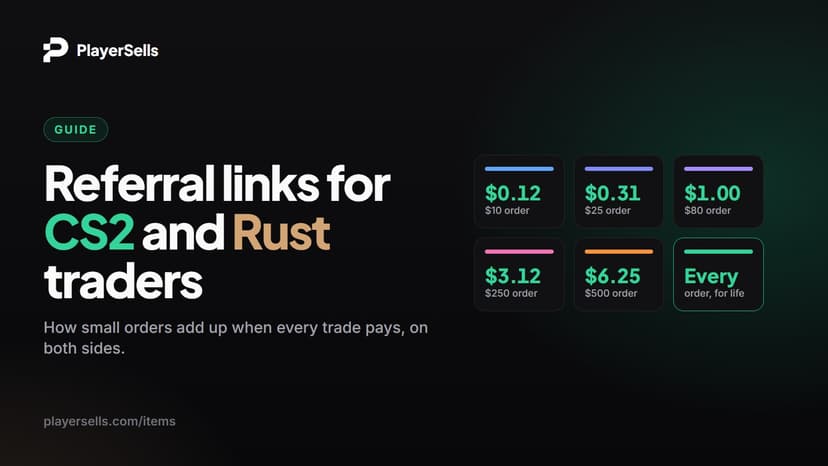
Referral Links for CS2 and Rust Traders: How Small Orders Add Up
A CS2 or Rust skin order pays a referrer cents to a few dollars, every time. See the numbers, where skin audiences gather and what to avoid.
Affiliate Rules: Disclosure, Payouts and Staying Eligible
The rules that keep your PlayerSells referral commissions eligible: self-referral, disclosure, attribution, refunds, payouts and what forfeits earnings.